Pantheon of Wonder

Essay

Abstraction of Colorful Light

Design Boundary to Enhance Architectural Experience

by Maria Lorena Lehman

Architectural Design
Architecture Drawing

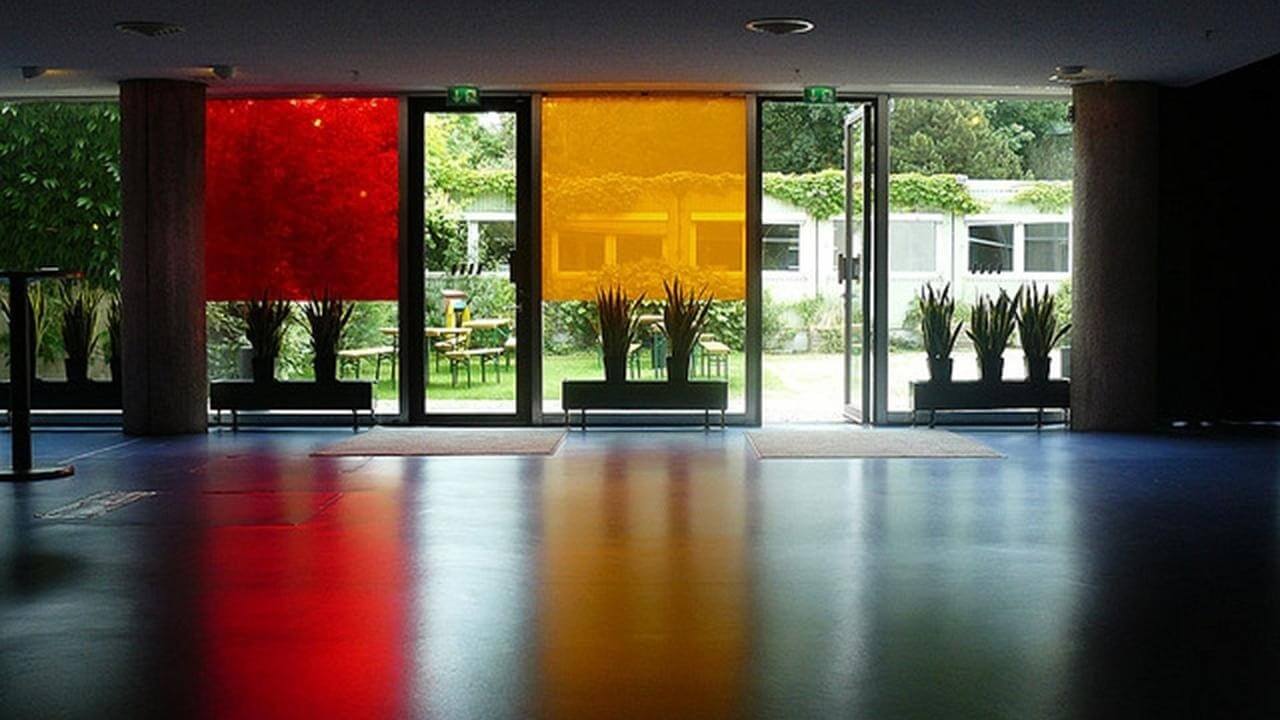
The experience of architecture often involves separating the exterior from the interior. Occasionally, the two meet through windows, doors, or other building fenestrations. Such a separation is not always a bad thing — since much can be accomplished through a design which separates the exterior from the interior. For example, the element of surprise or the element of safety can both be achieved by using an architectural skin’s boundary as a separator.

But what happens when an architecture’s skin disappears? If it becomes transparent, what does that mean for the occupants inside? Also, what does that mean for visitors in the exterior?

Well, there is such a building that uses boundary (or lack thereof) to enhance experience for visitors. You see, the Vertikale Kletterhalle is a climbing gym that makes use of its boundary to enhance experience. Its walls morph from day to night — when the walls become transparent to reconnect climbers with nature as they enjoy their sport. (1) To get a good idea of how this works, simply watch the following video.

As you can see, time passes and the feel of climbing within this gym changes. Thus, time becomes a key player making the building’s boundary active. By night, it becomes transparent and climbers feel the volume of space that accompanies and juxtaposes their climbing wall surface. And all of this leads to enhanced experience — where the vertical climb becomes a unique, one-of-a-kind experience at this location. Thus, composing a powerful sense of place.

Perhaps such a boundary-less space motivates climbers, and perhaps it also inspires them. After all, since nature “comes into” the climbing space once the sun sets, each climb will be different. Thus, much can be learned from the Vertikale Kletterhalle project. And at the forefront is this — to enhance experience within architecture don’t forget to take advantage of boundary elements, for they can allow spaces to merge, be juxtaposed, or feed off of one another by using not only material, but also nature together with time.

So, as you design your architecture, make each space speak with its boundary — whether that boundary serves to unite or separate, be aware of the advantages and disadvantages of each. Use boundary (or lack thereof) on purpose within your projects.

Reference:

(1) Walker, Daniela. This Building Becomes Transparent at Night. Mashable. Feb 8, 2013.

Image Credit: © passer-by | Flickr

Your invitation:


Dear reader,


I believe life is a continual process of awakening. As the journey of my own life continues, I always find myself connecting my experiences, studies, and ideas to new creative projects that bring beauty, inspiration, and hope for our world. For over 30 years, since starting at age 17, I have immersed myself in architectural design; and early on, I earned a Master of Design with Distinction from Harvard University, setting the foundation for decades of deep immersion in the field. Yet even before this, I held music close to my heart. At the age of 5, I began my first piano lessons; and since then, I began to see the world through a musical lens — even while designing architecture.


Over the decades, I grew closer and closer to music with a deep love for the design of instruments, their unique timbres, and for all the immersive ways their sounds could be interwoven into beautiful orchestrated compositions. I even began to develop a musical composition methodology, Spatial Symphonics, as I found my architectural design work becoming more and more emotive, soul-stirring, and yes: musical.


In recent years, I finally turned my focus to music composition. I hold a Graduate Diploma from the Film Scoring Academy of Europe where my works have been recorded by the acclaimed European Recording Orchestra (ERO), and I am founder of MLL ATELIER® — an award-winning studio now dedicated to my work as an orchestral composer, recording artist, and spatial symphonist — where I advance architectural design through music, and innovate music through an architectural design lens.


It is my hope that I can share my ongoing musical-design journey with you, directly from my studio through my video-newsletter entitled 'Orchestral Notes'. Expect video updates filled with first-access studio news announcing: album/book releases, concert premiers, sheet music publications, creative process sneak-peeks, and my own compositional philosophies as they develop to fuel my ongoing body of musical and architectural authorial works.


I would love for you to join me for this exciting adventure.


Simply click the button below to join my Orchestral Notes video-newsletter delivered every two weeks directly to your email inbox. Plus, get access to the full publication archives.

Let’s enjoy the beauty, inspiration, and hope that music brings.


Thank you for joining me on this wondrous journey.


Warmly,

Maria Lorena Lehman


Founder of MLL ATELIER® | Orchestral Notes

Your invitation:


Dear reader,


I believe life is a continual process of awakening. As the journey of my own life continues, I always find myself connecting my experiences, studies, and ideas to new creative projects that bring beauty, inspiration, and hope for our world. For over 30 years, since starting at age 17, I have immersed myself in architectural design; and early on, I earned a Master of Design with Distinction from Harvard University, setting the foundation for decades of deep immersion in the field. Yet even before this, I held music close to my heart. At the age of 5, I began my first piano lessons; and since then, I began to see the world through a musical lens — even while designing architecture.


Over the decades, I grew closer and closer to music with a deep love for the design of instruments, their unique timbres, and for all the immersive ways their sounds could be interwoven into beautiful orchestrated compositions. I even began to develop a musical composition methodology, Spatial Symphonics, as I found my architectural design work becoming more and more emotive, soul-stirring, and yes: musical.


In recent years, I finally turned my focus to music composition. I hold a Graduate Diploma from the Film Scoring Academy of Europe where my works have been recorded by the acclaimed European Recording Orchestra (ERO), and I am founder of MLL ATELIER® — an award-winning studio now dedicated to my work as an orchestral composer, recording artist, and spatial symphonist — where I advance architectural design through music, and innovate music through an architectural design lens.


It is my hope that I can share my ongoing musical-design journey with you, directly from my studio through my video-newsletter entitled 'Orchestral Notes'. Expect video updates filled with first-access studio news announcing: album/book releases, concert premiers, sheet music publications, creative process sneak-peeks, and my own compositional philosophies as they develop to fuel my ongoing body of musical and architectural authorial works.


I would love for you to join me for this exciting adventure.


Simply click the button below to join my Orchestral Notes video-newsletter delivered every two weeks directly to your email inbox. Plus, get access to the full publication archives.

Limited availability each month.


Warmly,

Maria Lorena Lehman


Founder of MLL ATELIER

Author of PANTHEON OF WONDER

Maria Lorena Lehman has received the following awards and has been seen in the following publications: