Pantheon of Wonder
Essay

How Communication Gestures Can Make Buildings Smarter
by Maria Lorena Lehman
User Interface Design
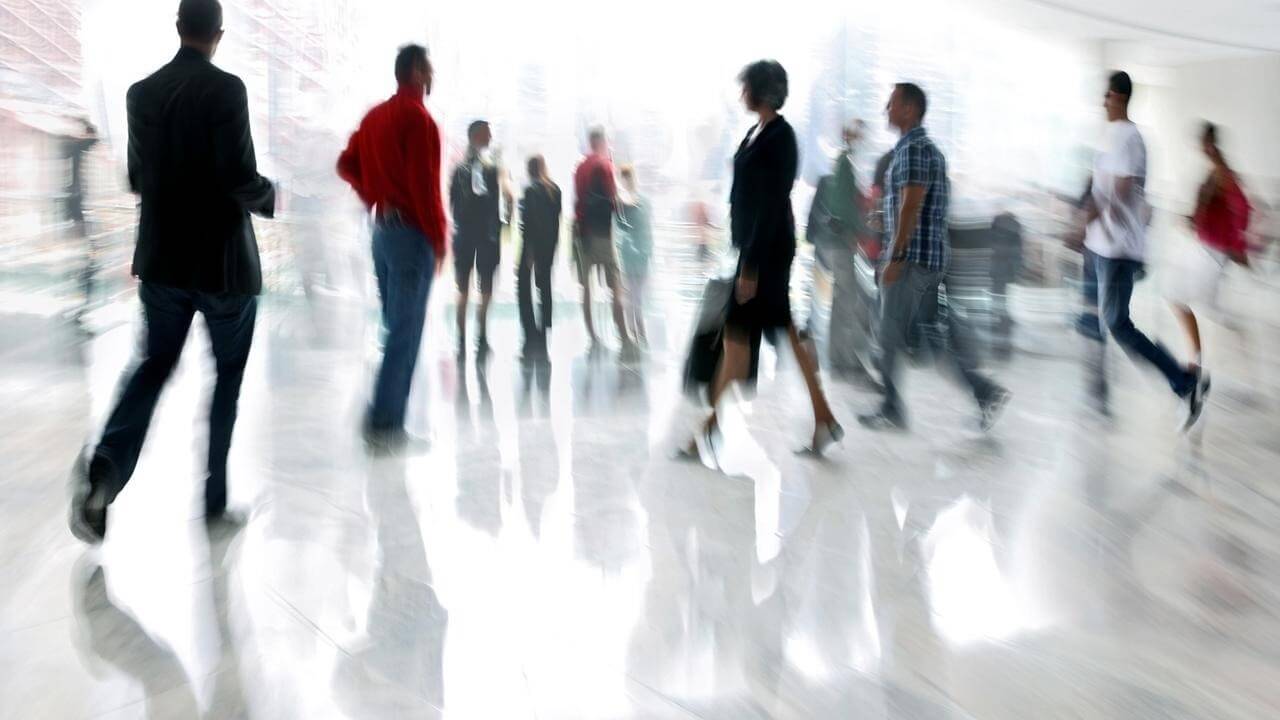
The two: building and occupants, have an unparalleled relationship where each adapts to the other over time and in different ways — and as new technologies, and in particular gesture technology, makes its way into the forefront, I think that buildings will be able to communicate with occupants through more natural, nonverbal and real-time cues.
For this reason, by not only observing communication gestures, but by also making use of them, you will be able to create architecture that not only better adapts to your occupants as their daily needs change, but you will also be able to enhance your own design skillset as you will better understand your client’s and occupants’ behavioral signals, so you can envision architectural solutions for them that they may not be able to articulate verbally.
There is an entire design fabric that you can acquire by simply understanding nonverbal communication elicited by your occupants as they inhabit built environments. In other words, occupants have behaviors and habits which can help you optimize your current design visions — and help you formulate renewed design visions that are innovative, improving upon present-day conventions about what we think occupants do in building designs.
Understanding Occupant Behaviors Using Communication Gestures
An open-source gesture technology which has surfaced is a glove within which is embedded an accelerometer, and from which information can be gathered and coupled with computer scripts, which link the wearer’s communication gestures to move such things as robotic objects. (1) While I do not see a future where all building occupants are always wearing such gloves to remotely control or interact with all of the objects within their surroundings, I do see certain uses where architecture can give occupant gestures meaning, particularly naturally occurring and/or intentional gestures.
For instance, many buildings today have lights that turn on and off automatically depending upon when and where an occupant enters into a room. As such, I can perceive a future where such natural and simple occupant behaviors (like walking into or exiting a room) within a building are used to develop environments which adapt more personally and more transiently to occupant needs at just the right moments within their experiential journey. The key here is to not overlook the naturally occurring communication gestures that occupants inherently emit as they go about their daily lives, even the simple and often overlooked ones, for these can be just as useful to you as a designer as their more obvious and purposefully-driven hand or body gesture signals.
How Everyday Objects Can Tie Architecture to the Human Body
Now, as new ways continue to develop for architecture to communicate with its occupants through more natural interfaces, I do see objects within architectural environments being used as a powerful intermediary between building and human body. And as more mobile and ubiquitous sensing technologies are embedded within everyday objects (such as furniture, lighting, appliances, and hand-held objects) the collective amount of information gathered will be able to communicate behavioral clues about an occupant. Thus, everyday objects are a means by which architecture can “interpret” its occupants’ behaviors. And from these, the building may respond accordingly.
Either way, the key becomes to design your buildings in a way that renews, with meaning, the relationship between a building and its occupants — whether they be communication gestures that are sensed through objects within an environment, observed as natural occupant body movements or even accessed through wearable sensors which monitor occupant behaviors.
The key is for you as an architect to not overlook the nuances in your occupants’ behaviors — not only focusing on the big things like when and where they sleep, eat, and work, but also by focusing on the little things like how they like to re-energize while working as compared to while exercising. Another aspect to consider is how your occupants communicate with each other nonverbally as they carry on with their daily functions. You can even take this a step further by looking at nuances in your occupants’ behavior when they see something of beauty — noticing what inspires them, tires them or teaches them.
Needless to say, as an architect there may be times where you need to act as a detective to unravel the nonverbal language which your occupants reveal, for there is likely great inspiration and knowledge within those nonverbal communication gestures from which you can draw more beautiful and innovative architectural designs that are equally unique as they are universal.
Reference:
(1) Covert, Adrian. Open-Source, Accelerometer-Equipped Glove Allows for Infinite Control Possibilities. PopSci.com. July 9, 2009
Image Credit: © bluraz | Fotolia











Maria Lorena Lehman has received the following awards and has been seen in the following publications: