Pantheon of Wonder
Essay

How Vertical Illusion Affects Perception in Architecture
by Maria Lorena Lehman
Neuroscience
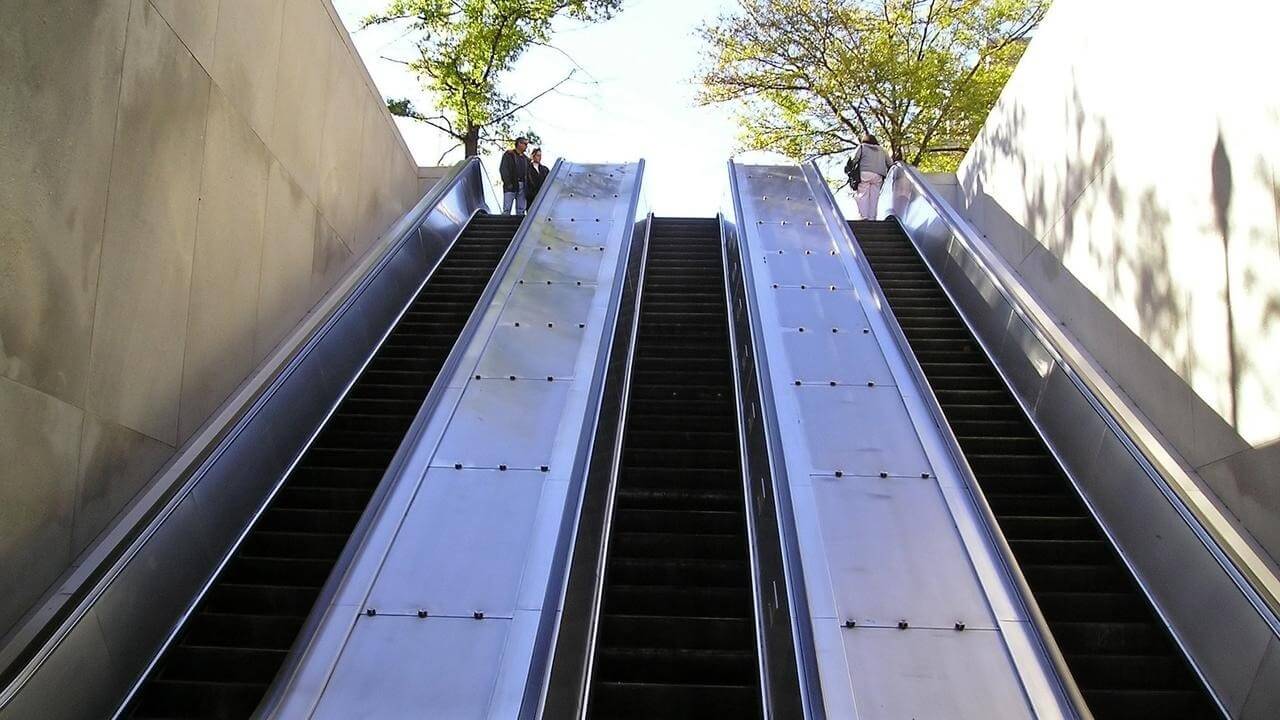
So, how steep is it? In the latest issue of SciAm Mind magazine an article describes how humans have trouble accurately determining height and slope of vertical inclines. To make matters more interesting, the article goes on to discuss how our perceptions are affected. It seems that if you are accompanied by friends (or supportive people) an incline will appear less steep. Conversely, if one is carrying a heavy load then the incline will appear steeper. Thus, the way inclines are interpreted is subjective.
Therefore, what does this mean for architectural design? Does it affect the way architects should design stairs, ADA ramps or escalators? What about atrium heights or even building heights? Also, are all architectural feature heights affected by the context which surrounds them? It is important to remember that extreme height and slope can often inspire a sense of awe. Sometimes designers want this, other times it can be too intimidating.
Let’s discuss ADA ramps. Understanding vertical illusion might help us understand how to design better inclines for easier and more inspired accessibility. Although such slopes are controlled by code, sometimes these sloped elevations seem to go on and on to match the neighboring stair grades. Such ADA accessible grades should be inviting –a positive occupant experience contributing the overall architectural design – not intimidating zig-zags that make one feel as if going through a sloped maze.
The vertical illusions perceived by all incline types should influence how architects design. Steep escalators, for instance, may need to stem from a platform that can house more people; thus, making the incline appear less steep and less intimidating. Conversely, to create a great feeling of awe, architects may want to embed a vertical element that stems from a more confined space so as to squeeze one’s eye upward – perhaps this is a vertical solely meant for observation instead of travel.
All in all, vertical illusions in architecture are important features. Occupants experience space and transitions through them. Considerate attention should be given to how people might perceive verticals by not only focusing on the vertical itself, but by also designing the spatial functions from which they stem. After all, even vertical sloped transitions are anticipatory – needing designed space that prepares one for their experience.
Image Credit: © Ken Cole | Dreamstime











Maria Lorena Lehman has received the following awards and has been seen in the following publications: