Pantheon of Wonder
Essay

The Importance of Library Today and Into Tomorrow
by Maria Lorena Lehman
Architectural Design
With the advent of the digital age, numerous writers and even artists have given thought to what the future of the library will bring. Have you, as an architect, given any thought to how the digital era is changing libraries today — where certain functions within the library are seeming to fade away while other functions are becoming magnified as they are central to what will make libraries evermore important in the future?
In a thought-provoking article that I recently read, written by Seth Godin and entitled The Future of the Library, Godin’s “take” on the library hits a core point as he explains… “[t]he librarian isn’t a clerk who happens to work at a library. A librarian is a data hound, a guide, a sherpa and a teacher. The librarian is the interface between reams of data and the untrained but motivated user”. And it is here where the importance of library rests, in what I call “sensemaking” — whether that be the “Seth Godin librarian”, or even the library architecture which may act as an extension to what the librarian, patrons and fostered information yield.
Library as a Dynamic Center for Idea Interaction
As books evolve into and from the digital world, they are becoming evermore ubiquitous, where more users are able to grasp more information more quickly. And because of this, there are many people who assume that because information is becoming decentralized, that it may be the end of libraries, deeming them less important as “books” become more widespread. Yet, with all of this information that is “everywhere”, there will, I believe, be greater need for “sensemaking” abilities — that is, the ability to decipher, translate and teach information. It becomes about bringing information forward to make it relevant, understandable and usable. As such, the importance of library to you as an architect remains in your ability to design a space that is socially, intellectually and emotionally conducive to “sensemaking” for the public.
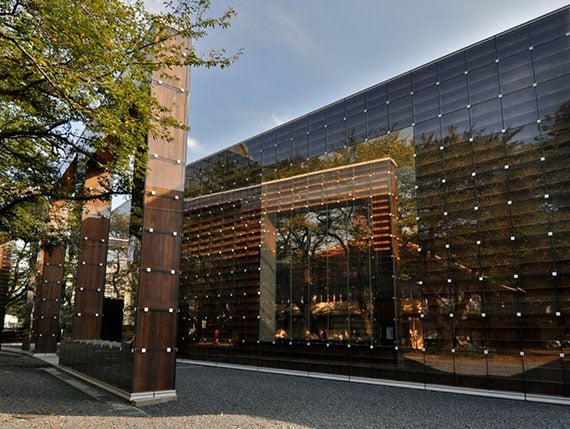
Musashino Art University Library by Sou Fujimoto. See how the exterior walls are an expression of the bookshelves based on a spiral plan. Image Credit: © prkbkr | Flickr
The future of library will be as a knowledge center that is dynamic, where not only the librarian, the “books” (whether real or virtual), and the users engage in an interchange of ideas — but the library architecture acts as not only a surrounding framework, but also as a healthy “space” where ideas can flourish, live, grow and even be protected. Thus, the importance of library relates as much to what goes on inside as it does to the building which houses those activities. In a great library architecture, ideas may prosper while those that come into contact with them learn, carry them in their minds as memories and behaviors, and share or teach them to the rest of their community. The library is important because it affects cultures, it affects innovation and it affects individuals.
Because of all this, library architecture has the responsibility to enhance these effects by providing a knowledge center that is inspirational and conducive to good communication and teaching interactions. Libraries are, in a certain sense, a microcosm of our world where ideas propagate and cultures surround them, while at the same time libraries are also an extension of each individual that seeks knowledge — whether for amusement, practical need, inspiration or even to help them teach others.
Library Architecture has a Bright Future
I think that in order to create good library architecture, to preserve the importance of library for the future, it will be essential to tackle three elements very well — they are communication, interaction and inspiration. With each, the library building should foster interactions between not only the librarian and their patrons, but also directly between the information and the people that use it. Additionally, the architecture has the power to engage library occupants anew, where not only reading and working take place, but also where teaching abounds, as the virtual and physical fuse to peak curiosity and spark insight.
Thus, the public library has a bright future where you as an architect can tie in modern-day social aspects that surround information; thus, turning it into knowledge. By thinking about how the two interconnect, and how information travels and is used today, you stand in prime position to design a library architecture that brings additional life to “knowledge interactions”. The importance of library remains, not because it solely revolves around physical books which may or may not fade away, but because it ultimately revolves around people and their ideas.
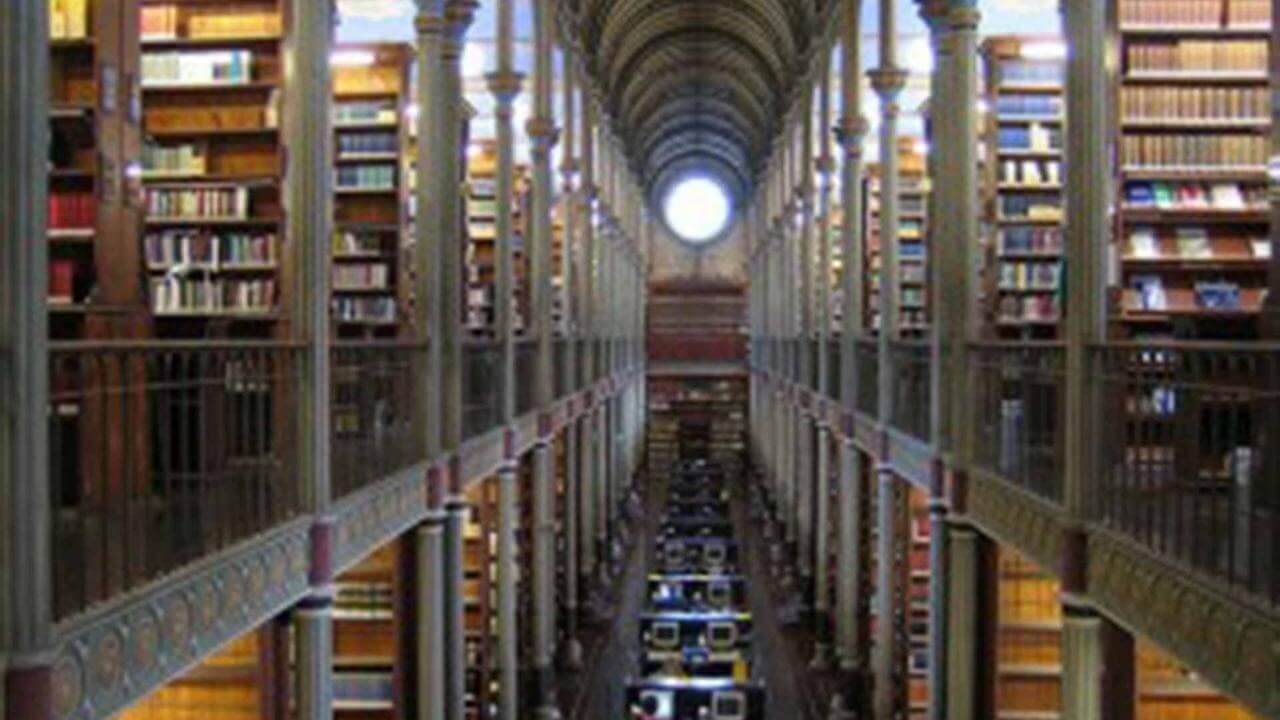
Image Caption: Library of the old university in Copenhaan. See how computers are making their way into the central axis of the library.
Image Credit: © pnoeric | Flickr











Maria Lorena Lehman has received the following awards and has been seen in the following publications: