Pantheon of Wonder

Essay

Abstraction of Colorful Light

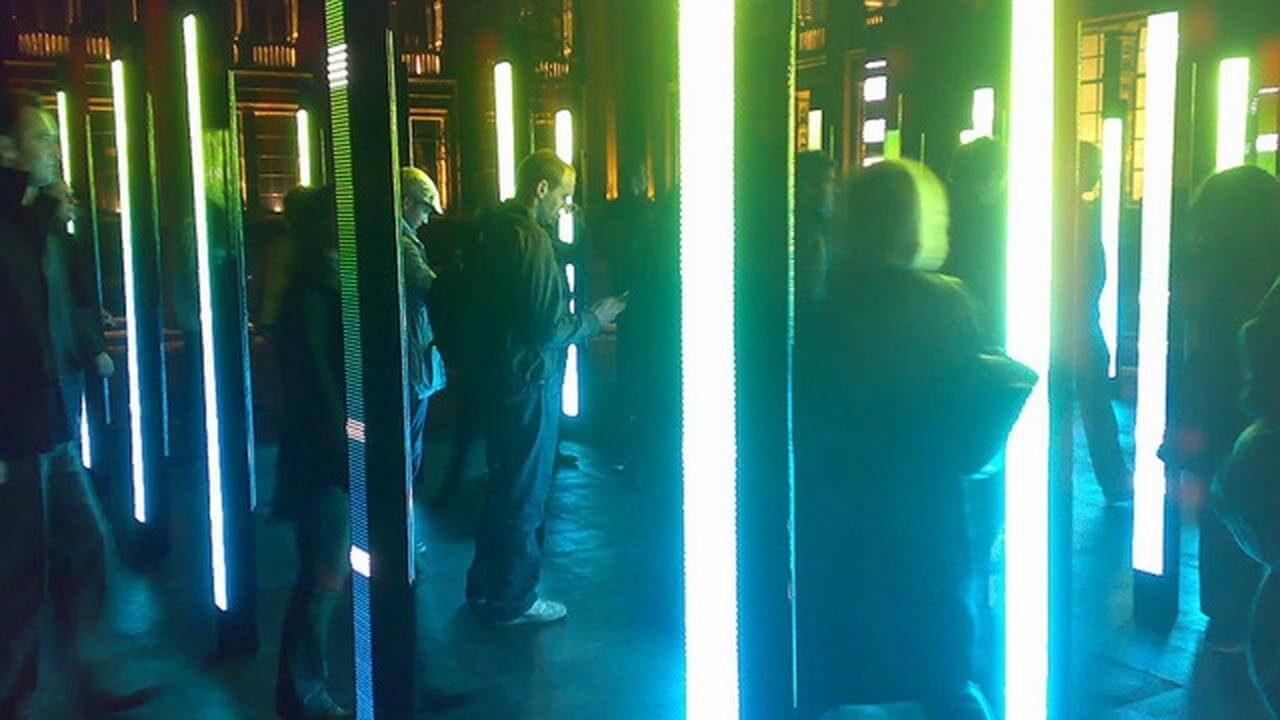
Unused Urban Space Can Benefit from Sensory Installations

by Maria Lorena Lehman

Architectural Design
Architecture Drawing

The in-between spaces that remain within urban areas often pose many challenges for designers. Such spaces get left to form dangerous alleyways or corners that repel people. Also, such spaces do nothing to support their adjacent buildings — from a sensory design perspective. Urban space that is “left behind” often becomes unused, simply existing as wasted space — in other words, a missed opportunity.

That’s why it is wonderful to see projects like the one built at London’s Great Ormond Street Hospital. This aural installation takes advantage of what positives the space exudes, and uses those to its advantage to yield more than the sum of its parts. You see, in the in-between urban space (between two buildings) the installation called the Lullaby Factory serves to create music. By integrating instrument-looking horns and pipes, the installation exudes sound (and even song). And the best part is that the installation uplifted an otherwise doomed urban space into a special, uplifting, and engaging space.

Urban space sensory installations that coordinate with their adjacent architectural environments can really help an area — by giving more engagement, safety, and enjoyment to its visitors. Such sensory installations can also be interactive: where visitors can work either alone or in a group to create amazing sounds, visualizations, or structural configurations. Such installations create design nodes within urban spaces, and such nodes can serve many functions.

You may ask: How does an installation help the architecture which it resides next to?

Sensory installations can serve to bring in more building visitors. They can also serve to “prepare” visitors for entrance into a neighboring building. Or they can serve to socially gather people together — as they may work together within an interactive installation. They are a great way to draw attention to an urban area — to make it vibrant again.

Don’t let unused forgotten space detract from your project. Instead, find ways to enhance your project because of it. And keep sensory installations in mind, for they are a great way to add uniqueness, vibrancy, and beauty to your design. After all, unused urban space, when designed for properly, can become quite the magnet that engages occupants by peeking their curiosity. Through their senses, such installations can be playful, beautiful, and even educational — so, keep them in mind as you strive to revitalize an urban area, or bring design ingenuity to a new one. Don’t ignore those in-between spaces, for they can make or break your design over time.

Image Credit: © Frankie Roberto | Flickr

Your invitation:


Dear reader,


I believe life is a continual process of awakening. As the journey of my own life continues, I always find myself connecting my experiences, studies, and ideas to new creative projects that bring beauty, inspiration, and hope for our world. For over 30 years, since starting at age 17, I have immersed myself in architectural design; and early on, I earned a Master of Design with Distinction from Harvard University, setting the foundation for decades of deep immersion in the field. Yet even before this, I held music close to my heart. At the age of 5, I began my first piano lessons; and since then, I began to see the world through a musical lens — even while designing architecture.


Over the decades, I grew closer and closer to music with a deep love for the design of instruments, their unique timbres, and for all the immersive ways their sounds could be interwoven into beautiful orchestrated compositions. I even began to develop a musical composition methodology, Spatial Symphonics, as I found my architectural design work becoming more and more emotive, soul-stirring, and yes: musical.


In recent years, I finally turned my focus to music composition. I hold a Graduate Diploma from the Film Scoring Academy of Europe where my works have been recorded by the acclaimed European Recording Orchestra (ERO), and I am founder of MLL ATELIER® — an award-winning studio now dedicated to my work as an orchestral composer, recording artist, and spatial symphonist — where I advance architectural design through music, and innovate music through an architectural design lens.


It is my hope that I can share my ongoing musical-design journey with you, directly from my studio through my video-newsletter entitled 'Orchestral Notes'. Expect video updates filled with first-access studio news announcing: album/book releases, concert premiers, sheet music publications, creative process sneak-peeks, and my own compositional philosophies as they develop to fuel my ongoing body of musical and architectural authorial works.


I would love for you to join me for this exciting adventure.


Simply click the button below to join my Orchestral Notes video-newsletter delivered every two weeks directly to your email inbox. Plus, get access to the full publication archives.

Let’s enjoy the beauty, inspiration, and hope that music brings.


Thank you for joining me on this wondrous journey.


Warmly,

Maria Lorena Lehman


Founder of MLL ATELIER® | Orchestral Notes

Your invitation:


Dear reader,


I believe life is a continual process of awakening. As the journey of my own life continues, I always find myself connecting my experiences, studies, and ideas to new creative projects that bring beauty, inspiration, and hope for our world. For over 30 years, since starting at age 17, I have immersed myself in architectural design; and early on, I earned a Master of Design with Distinction from Harvard University, setting the foundation for decades of deep immersion in the field. Yet even before this, I held music close to my heart. At the age of 5, I began my first piano lessons; and since then, I began to see the world through a musical lens — even while designing architecture.


Over the decades, I grew closer and closer to music with a deep love for the design of instruments, their unique timbres, and for all the immersive ways their sounds could be interwoven into beautiful orchestrated compositions. I even began to develop a musical composition methodology, Spatial Symphonics, as I found my architectural design work becoming more and more emotive, soul-stirring, and yes: musical.


In recent years, I finally turned my focus to music composition. I hold a Graduate Diploma from the Film Scoring Academy of Europe where my works have been recorded by the acclaimed European Recording Orchestra (ERO), and I am founder of MLL ATELIER® — an award-winning studio now dedicated to my work as an orchestral composer, recording artist, and spatial symphonist — where I advance architectural design through music, and innovate music through an architectural design lens.


It is my hope that I can share my ongoing musical-design journey with you, directly from my studio through my video-newsletter entitled 'Orchestral Notes'. Expect video updates filled with first-access studio news announcing: album/book releases, concert premiers, sheet music publications, creative process sneak-peeks, and my own compositional philosophies as they develop to fuel my ongoing body of musical and architectural authorial works.


I would love for you to join me for this exciting adventure.


Simply click the button below to join my Orchestral Notes video-newsletter delivered every two weeks directly to your email inbox. Plus, get access to the full publication archives.

Limited availability each month.


Warmly,

Maria Lorena Lehman


Founder of MLL ATELIER

Author of PANTHEON OF WONDER

Maria Lorena Lehman has received the following awards and has been seen in the following publications: